
Pterygium Diagnosis and Surgical Removal at OC Eye Institute in Laguna Hills and Santa Ana, CA
A pterygium is a non-cancerous, fleshy growth on the surface of the eye that develops from the conjunctiva — the clear membrane covering the white of the eye — and spreads onto the cornea. While often harmless in its early stages, a pterygium that grows unchecked can cause persistent irritation, distort vision, and eventually require surgical removal. At OC Eye Institute in Laguna Hills and Santa Ana, CA, Dr. George Salib is highly experienced in both monitoring and surgically treating pterygium, having performed an extensive number of these procedures. Call (949) 770-1322 - Laguna Hills Office or (949) 770-1322 - Santa Ana Office to schedule an evaluation today.
Pterygium – causes, implications, and treatments are available.
What Is a Pterygium?
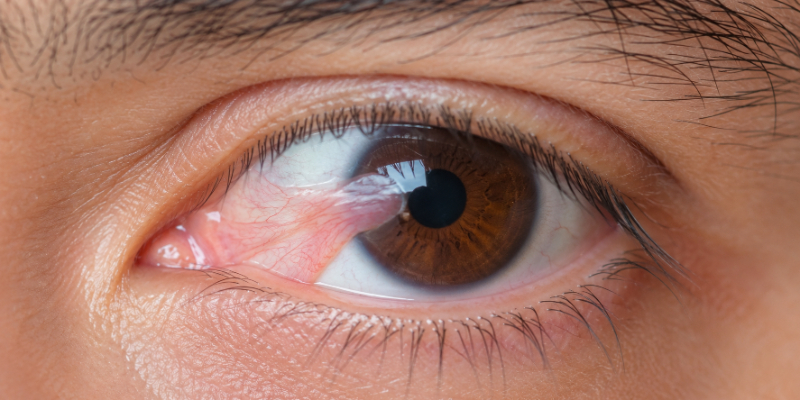
A pterygium (pronounced teh-RIJ-ee-um) is a wedge-shaped overgrowth of conjunctival tissue that extends from the white part of the eye (the sclera) onto the clear cornea. It typically appears on the inner corner of the eye closest to the nose, though it can also develop on the outer corner. The growth is usually whitish-pink in color with visible blood vessels, and while it is benign in nature, it can become a significant concern depending on its rate of growth and the symptoms it causes.
The primary cause of pterygium development is prolonged exposure to ultraviolet (UV) light — which is why the condition is sometimes called “surfer’s eye” and is more prevalent in people who spend significant time outdoors, particularly in sunny, dusty, or windy environments. Individuals living in high UV exposure regions like Southern California are at elevated risk. The UV radiation triggers abnormal cell growth in the conjunctiva, which gradually encroaches on the cornea over time. Other contributing factors include dry, windy, or dusty conditions, and a history of chronic dry eye disease.
In its early stages, a pterygium may cause only mild redness, a gritty or foreign-body sensation, and cosmetic concern. As it grows and approaches the center of the cornea, however, it can begin to distort the corneal surface, inducing astigmatism and causing blurred or double vision. In rare cases, what appears to be a pterygium may actually be a more serious eye growth that warrants careful examination. This is why any unusual growth on the surface of the eye should always be evaluated by an experienced ophthalmologist like Dr. Salib at OC Eye Institute.
Treatment Options: Monitoring vs. Surgery
Not every pterygium requires immediate surgical intervention. In many cases, especially when the growth is small and not encroaching on the visual axis, the most appropriate course of action is careful monitoring combined with conservative management. Wearing UV-protective sunglasses is one of the most important steps a patient can take to slow the progression of a pterygium — minimizing further UV exposure reduces the stimulus for continued growth. Preservative-free artificial tears and, in some cases, mild anti-inflammatory or allergy eye drops can relieve irritation and redness and improve surface comfort.
However, when a pterygium causes persistent discomfort that is not controlled by conservative measures, begins to threaten the visual axis by growing too close to the center of the cornea, induces meaningful astigmatism, or when the patient has a significant cosmetic concern, surgical removal is recommended. Pterygium excision is performed on an outpatient basis under local anesthesia at OC Eye Institute. The procedure involves carefully removing the pterygium and replacing the affected area with a graft of healthy conjunctival tissue taken from another part of the eye’s surface — a technique known as conjunctival autografting. This approach dramatically reduces the risk of recurrence compared to simple excision alone, which historically carried a high recurrence rate. Our surgical team at OC Eye Institute will guide you through every step of the process before, during, and after your procedure.
Whether your pterygium is newly discovered or has been monitored for some time, we encourage you to schedule a thorough evaluation at OC Eye Institute in Laguna Hills and Santa Ana, CA. Dr. Salib will assess the size and progression of the growth, evaluate your corneal health, and make a clear recommendation tailored to your individual situation. Also explore our related services including dry eye treatment — often an important companion therapy for pterygium patients — and our full range of eye procedures. Call (949) 770-1322 - Laguna Hills Office or (949) 770-1322 - Santa Ana Office today to get started.
Frequently Asked Questions About Pterygium Surgery
What is a pterygium and how do I know if I have one?
A pterygium is a fleshy, wedge-shaped growth that develops on the white of the eye and can extend onto the cornea. It typically appears as a pinkish-white triangular tissue near the inner corner of the eye and may cause redness, irritation, a gritty sensation, or a cosmetically noticeable change in the appearance of your eye. If you notice a growth on the surface of your eye or experience persistent eye irritation, schedule an evaluation at OC Eye Institute in Laguna Hills and Santa Ana, CA by calling (949) 770-1322 - Laguna Hills Office or (949) 770-1322 - Santa Ana Office . Early diagnosis is important to rule out more serious conditions.
Does a pterygium need to be removed right away?
Not necessarily. Small, stable pterygiums that are not causing significant symptoms or threatening vision can often be monitored and managed conservatively with UV-protective sunglasses, artificial tears, and anti-inflammatory eye drops as needed. Surgery is typically recommended when the pterygium is growing toward the center of the cornea, causing significant visual distortion or astigmatism, producing persistent discomfort that does not respond to conservative measures, or causing cosmetic concerns that affect quality of life. Dr. Salib at OC Eye Institute will advise you on the best approach for your individual case.
What does pterygium surgery involve?
Pterygium surgery is performed as an outpatient procedure under local anesthesia. Dr. Salib carefully removes the pterygium from the corneal surface and replaces the affected area with a small graft of healthy conjunctival tissue taken from another part of the patient’s own eye — a technique called conjunctival autografting. This approach significantly reduces the risk of the pterygium growing back compared to simple excision. The procedure is typically well-tolerated, and most patients return home the same day with post-operative eye drops and instructions for a smooth recovery.
Will my pterygium come back after surgery?
Pterygium recurrence was historically a significant concern with older surgical techniques. At OC Eye Institute, Dr. Salib uses conjunctival autografting — transplanting healthy tissue from the patient’s own eye — which has been shown to dramatically reduce recurrence rates compared to bare sclera excision. Wearing UV-protective sunglasses consistently after surgery is also an important step in preventing regrowth. If a pterygium does recur, additional surgical treatment may be possible.
How long is recovery after pterygium surgery?
Recovery after pterygium surgery varies by patient, but most people experience some redness, mild discomfort, and light sensitivity for one to two weeks following the procedure. Prescription eye drops are used to support healing and reduce inflammation. Most patients are able to resume normal daily activities within a few days, though we recommend avoiding swimming and strenuous activity for a short period. Dr. Salib will schedule follow-up visits at OC Eye Institute in Laguna Hills and Santa Ana, CA to monitor your healing progress.
Can pterygium cause permanent vision damage?
If a pterygium grows significantly onto the cornea and distorts its surface, it can induce astigmatism and reduce visual clarity. In advanced cases where the pterygium extends close to or over the visual axis, meaningful vision impairment can occur. This is why regular monitoring and timely intervention — when indicated — are so important. Addressing a pterygium before it reaches the central cornea generally results in better visual outcomes. Call OC Eye Institute at (949) 770-1322 - Laguna Hills Office or (949) 770-1322 - Santa Ana Office to schedule an evaluation if you have a pterygium or suspect one.
How do I schedule pterygium surgery at OC Eye Institute?
To schedule a pterygium evaluation or surgical consultation at OC Eye Institute in Laguna Hills and Santa Ana, CA, call us at (949) 770-1322 - Laguna Hills Office or (949) 770-1322 - Santa Ana Office or submit a request through our online appointment form. Dr. Salib will examine the growth, assess its impact on your vision and ocular surface, and present a clear treatment recommendation. New patients are always welcome — visit our new patients page to learn more about your first visit.